House for a tractor
Tomar, Portugal
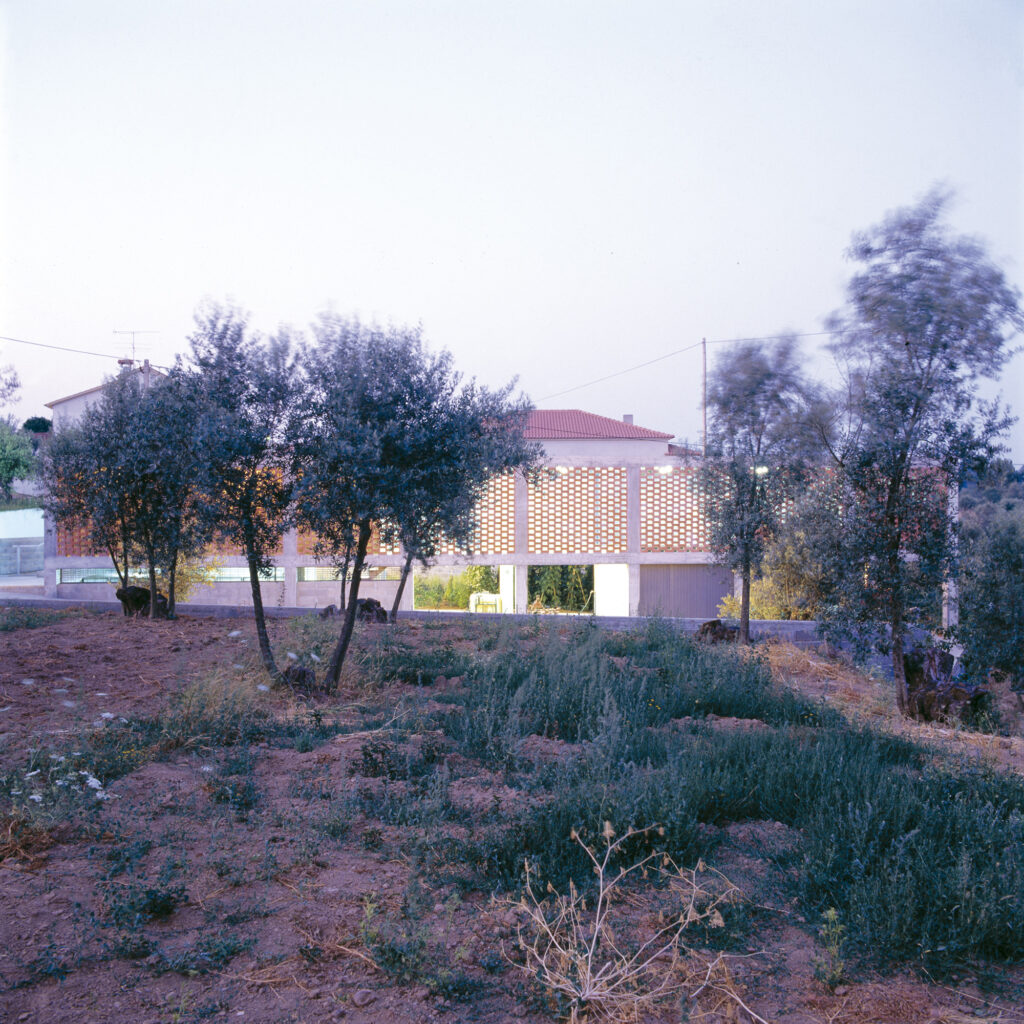
Here, the confluence of the Tagus and Zêzere rivers announces the delta. Land and water intermingle in a landscape founded on uncertainty: a silty, unstable terrain where vegetation beaten down by the floods does not recover. In the Ribatejo region, Lusitano horses and herds of fighting bulls inhabit the river’s expanded floodplain. Vast, indistinct expanses are punctuated by small white structures of elementary typologies — a compromise between land and water.
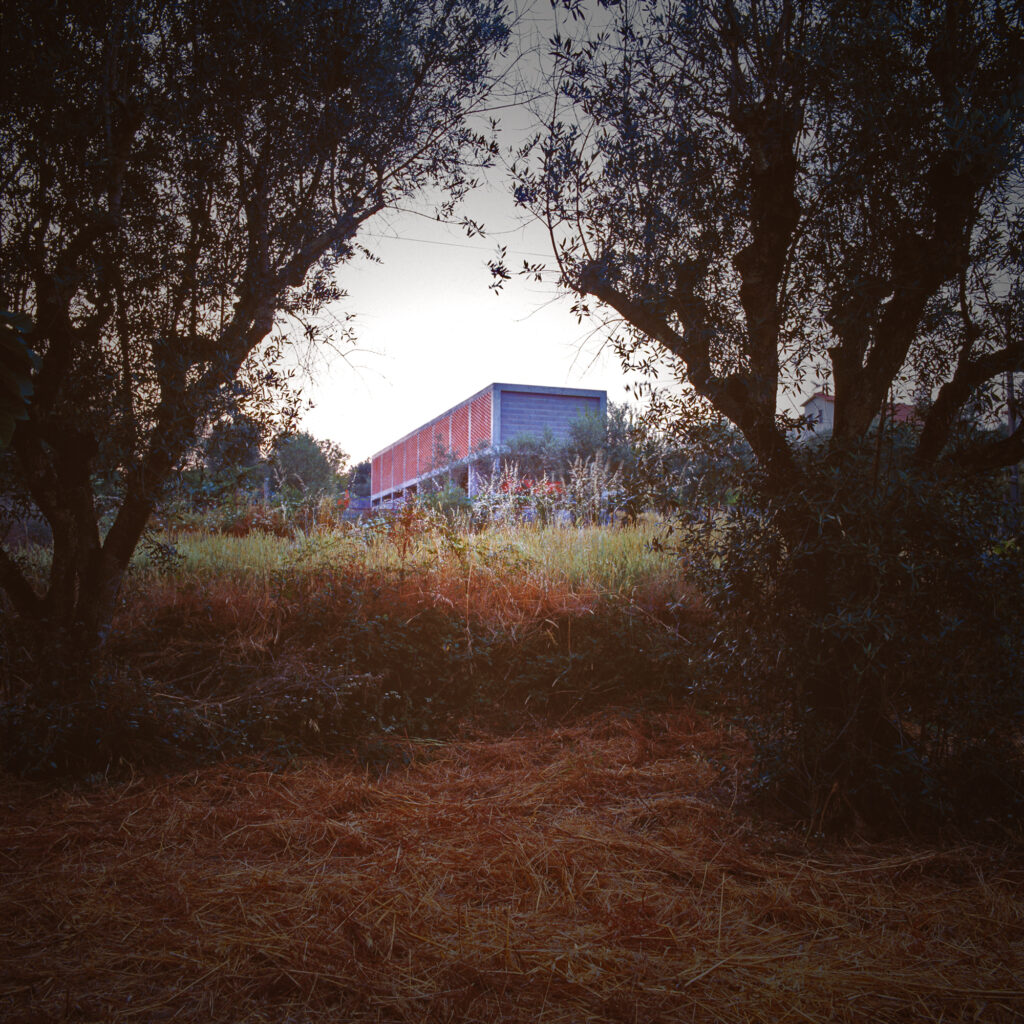
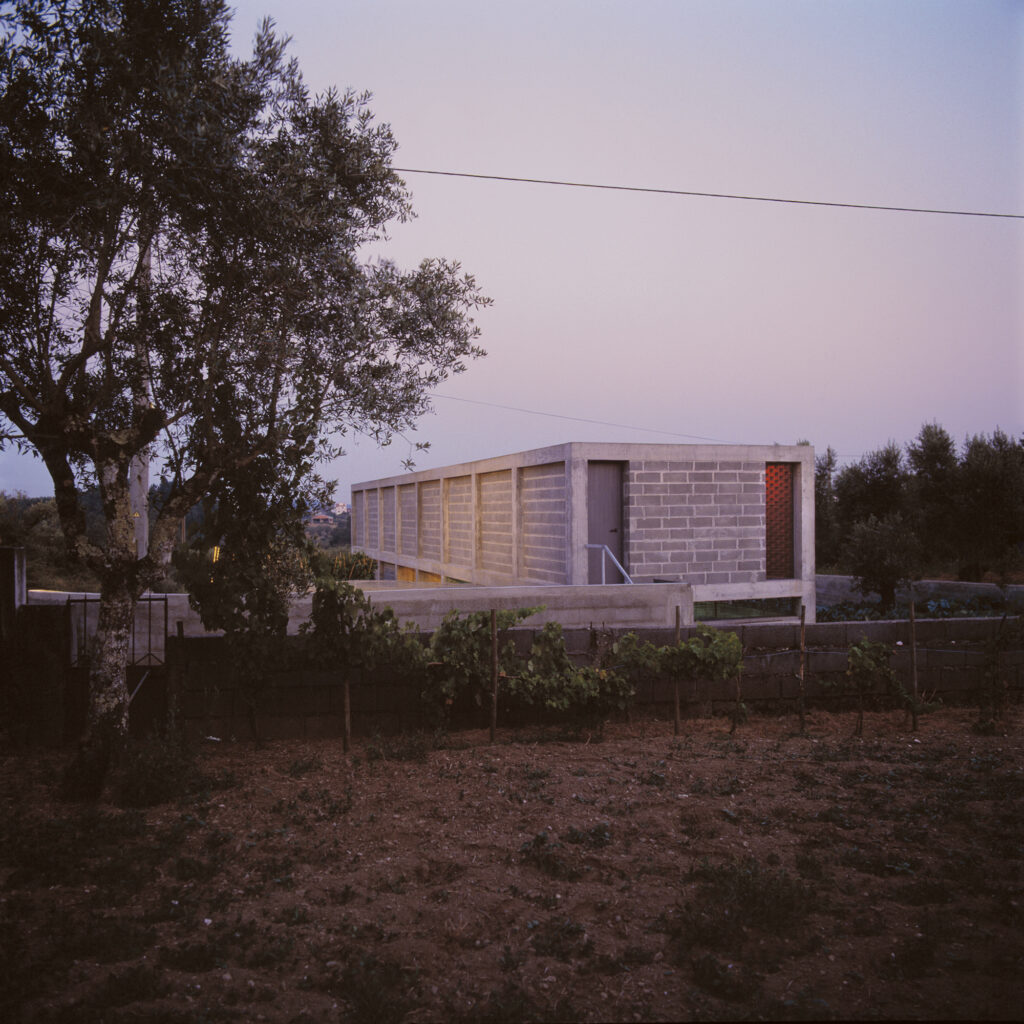
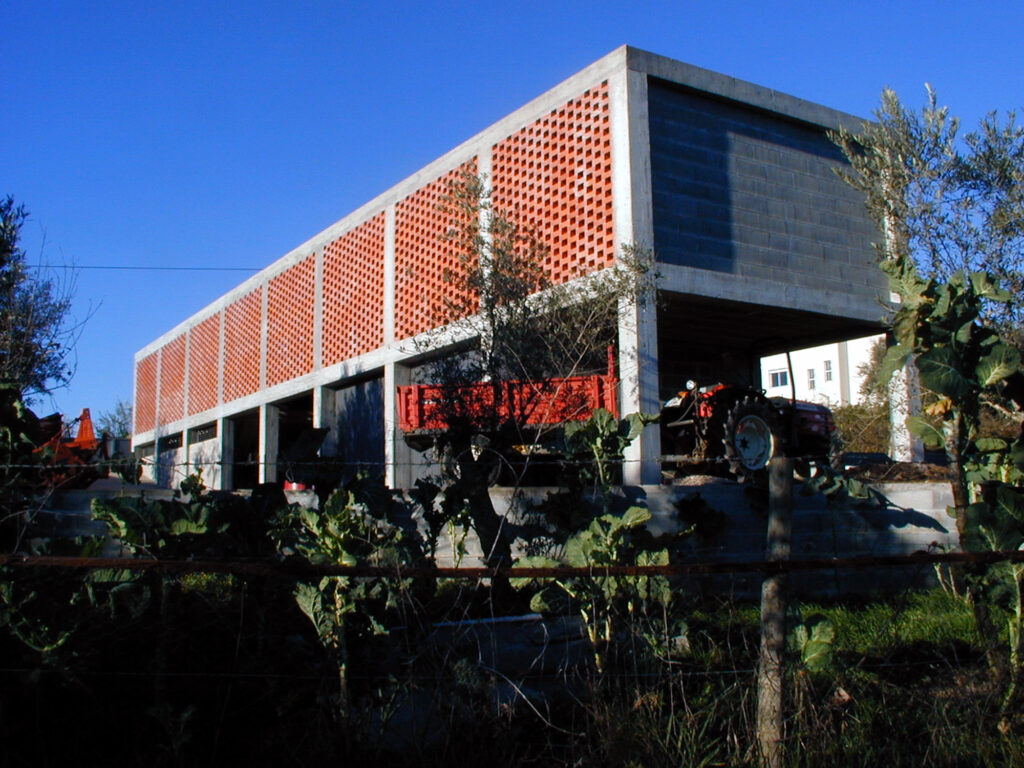
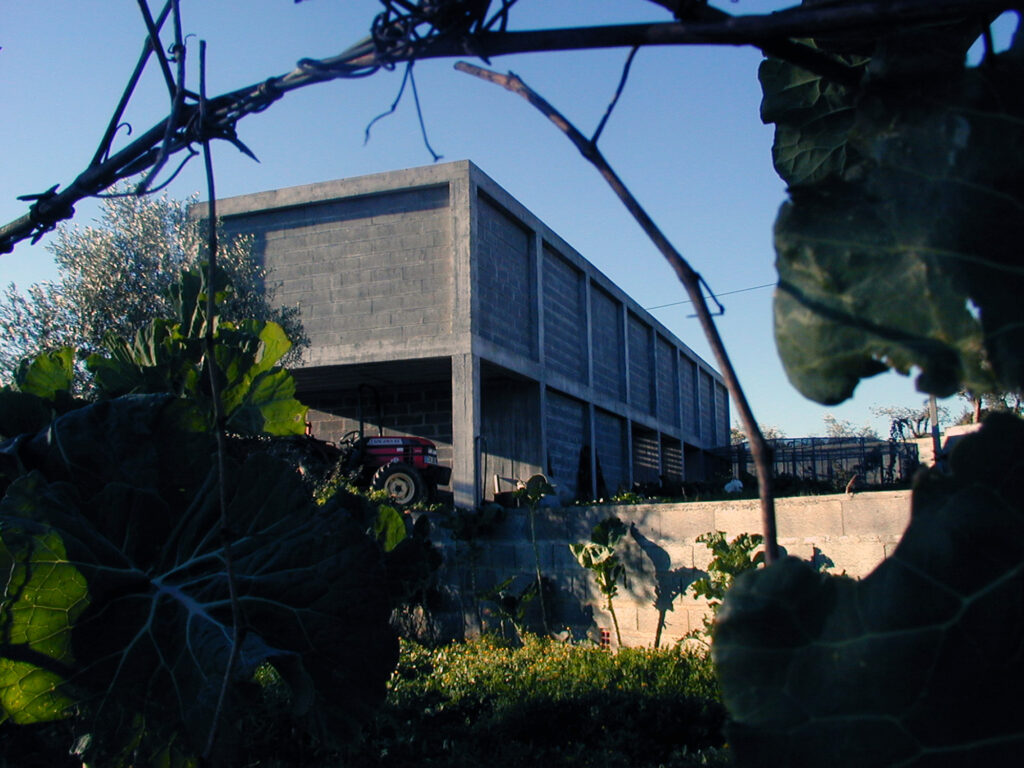
For an agricultural building near Tomar, Pedro Machado Costa revisits the typology of the espigueiros, traditional granaries for maize and grain: volumes detached from the farm buildings, marking the landscape with a concise gesture.
With no greater ambition than to be useful, these small stone parallelepipeds raised on stilts were often given a particular treatment, a sentimental gesture that elevates them beyond their function and gives them an unexpected emotional quality. The same can be said of this contemporary agricultural building, the first work by the young architect, who would go on to develop a bold body of work.
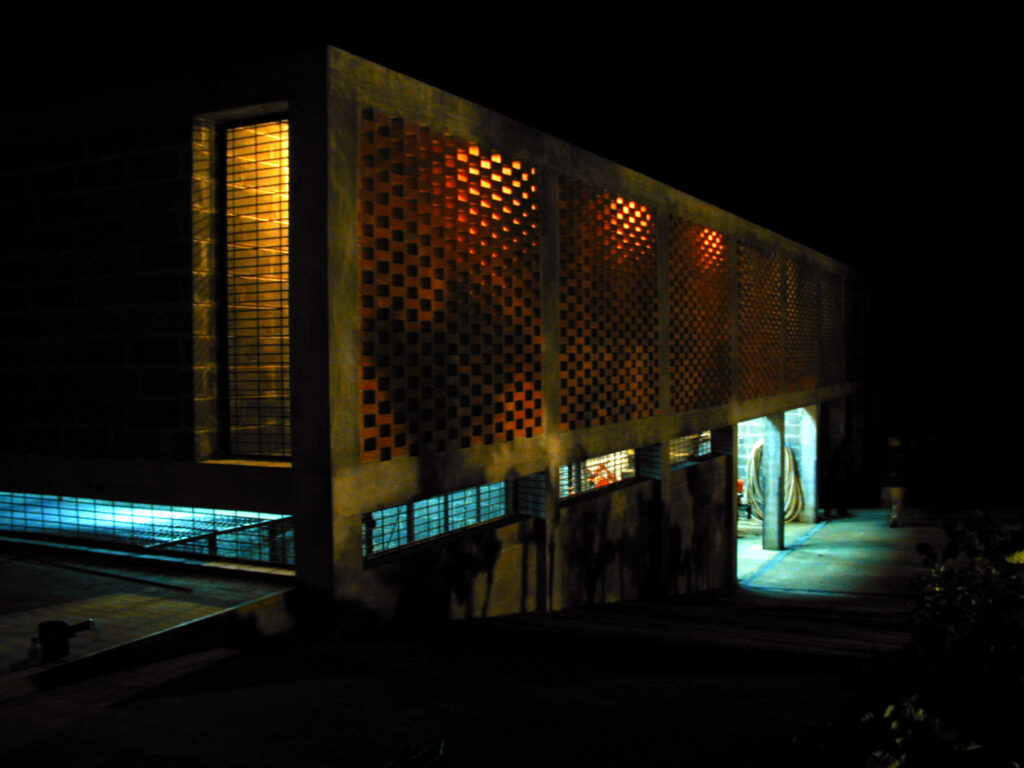
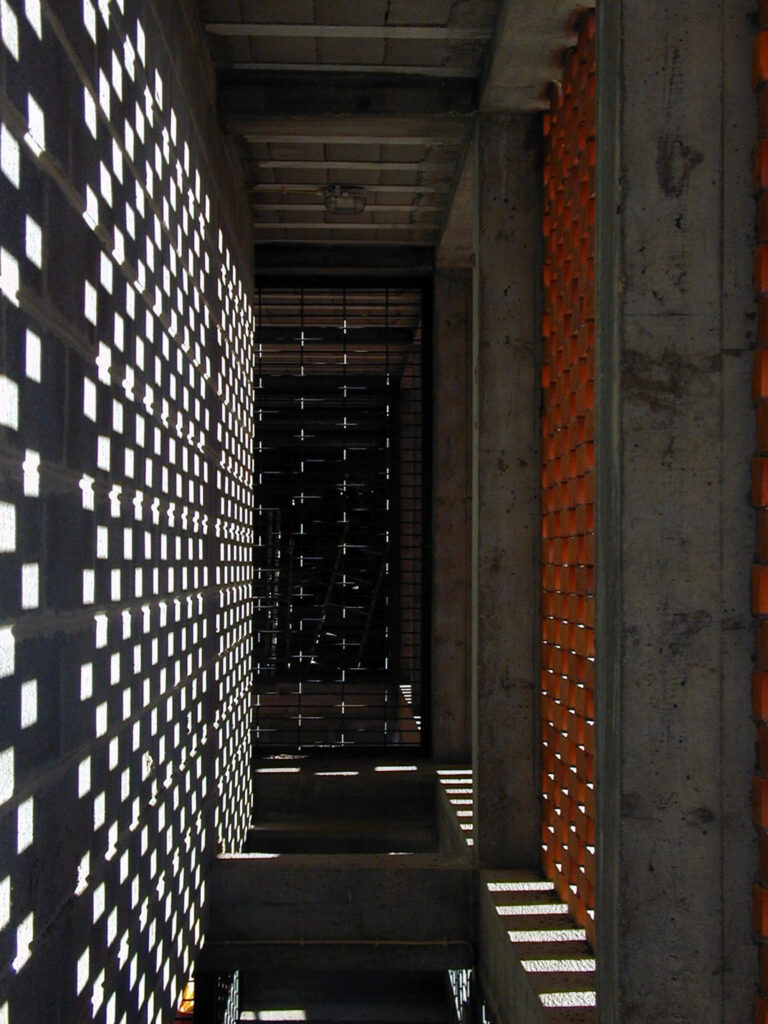
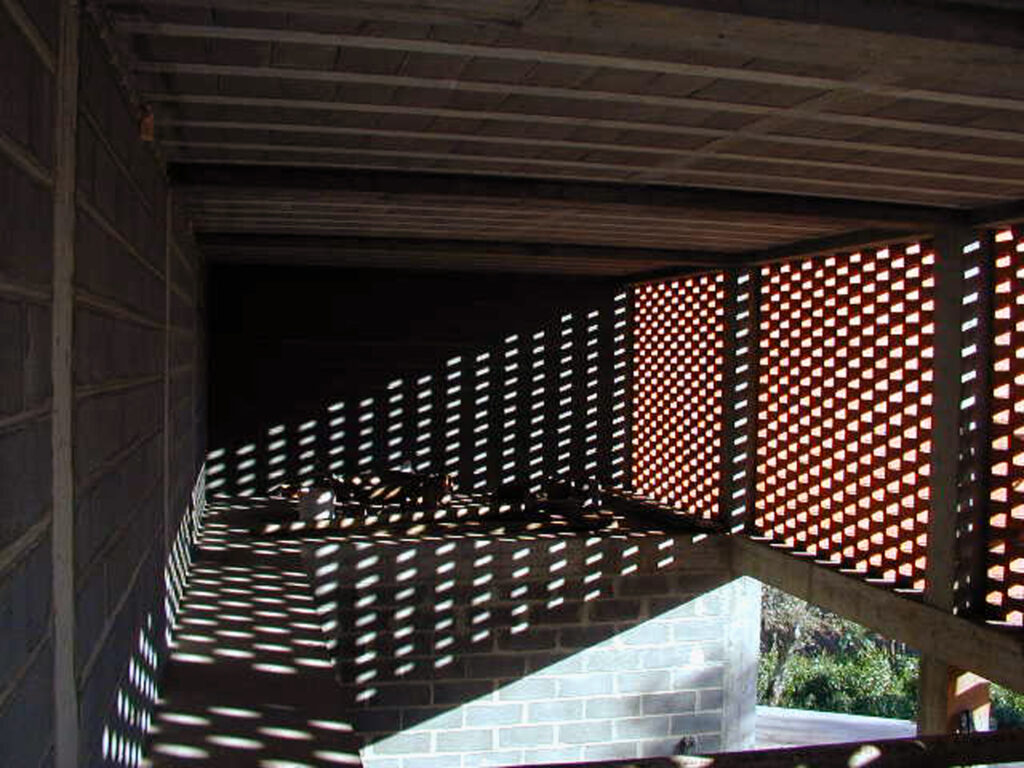
By translating the object into the contemporary anonymity of the box, Machado Costa avoids a literal reproduction of the espigueiro while allowing the programme to enter the volume more freely. From tradition, he retains architectural elements such as the perforated walls, constructed here in brick rather than wood or stone, filtering the interior with a delicate, lace-like half-light. In doing so, the building achieves the most precise expression, the closest response to the essential nature of this architecture of labour: its modesty.
It is one of the most beautiful projects in the world.